DIY vs Freelancer vs Agency vs Managed Website for Small Business: What Contractors Should Know
If you run a contracting business, your website is not a side project. It is part storefront, part estimator, part sales rep, and part reputation manager. Homeowners and property managers do not just look you up to admire a logo. They want to know whether you serve their area, whether your work looks credible, how fast they can reach you, and whether they trust you enough to request a quote.
That is why the real question is not simply, how much does a contractor website cost. The better question is what kind of website setup gives you the best return for the way your business actually operates.
I have seen contractors go both directions. Some need a basic, respectable online presence fast, with contact info, service pages, and a gallery. Others need sharper positioning, better lead flow, and a site that can support active marketing. The wrong decision usually comes from buying based on sticker price alone. A cheap site that never gets updated, loads poorly on mobile, or hides the phone number is expensive in all the ways that matter.
There are four common paths: DIY, freelancer, agency, and a managed website for small business. Each can be the right choice. Each can also be the wrong one if it does not match your goals, schedule, and tolerance for ongoing website work.
What a contractor website is supposed to do
Before comparing options, it helps to strip away the noise. A contractor website is not successful because it wins a design award. It is successful because it helps a customer complete a task you care about. Usually that means calling, filling out a form, asking for an estimate, or confirming that you are the right company for the job.
For a pool screen enclosure website design, that may mean making finished projects easy to browse and showing service areas clearly. For a concrete coating website design or epoxy flooring website design, it often means presenting before and after visuals, explaining process and surfaces served, and making it easy for a homeowner to ask for pricing. A dock builder website design may need to reassure visitors about scope, materials, and local experience. A mold remediation website design has to support urgency and trust. A home remodeling website design may need stronger project segmentation because kitchens, baths, additions, and whole-home work all attract different customers. Flooring contractor website design often lives or dies on whether the site quickly answers, “Do they handle my type of floor, and can I see the results?”
That is why contact details, mobile usability, current information, and straightforward navigation matter so much. If those basics are weak, everything else suffers.
DIY is cheaper upfront, but it costs you time and judgment
The DIY route is usually the most budget-friendly way to get online. That is its biggest advantage, and for some contractors, that is enough. If you are just starting out, testing a new service line, or simply need a clean site with core information, a website builder can absolutely work.
This is where the search for the best website builder for contractors usually starts. Builders are attractive because they lower the barrier to entry. You can get pages live, upload photos, add your phone number, and create a contact form without waiting on a developer. If your needs are simple, that can be a smart move.
The catch is that “simple” has a way of turning complicated once real business demands hit. A contractor may start with the thought, “I only need five pages.” Then come the revisions. New service areas. Better project photos. A second phone number. Seasonal offers. Testimonials that need formatting. Copy that sounds generic and does not reflect how the crew actually works. Suddenly the owner is spending late nights doing website tasks instead of following up leads or managing jobs.
DIY also assumes you can make decent decisions about layout, content hierarchy, messaging, and mobile presentation. Most contractors are excellent at estimating, scheduling, jobsite problem-solving, and customer service. That does not automatically translate into web strategy. A site can look acceptable to the owner and still fail at conversion because the most important actions are buried.
DIY tends to make the most sense when the business needs a credible online presence more than a competitive edge. If the goal is to establish trust, show services, and provide a clean way to get in touch, it can be enough. If the goal is to outmaneuver stronger local competitors, support ad traffic, or sharpen positioning in a crowded market, it often starts to show its limits.
Freelancers sit in the middle, and that can be a very good place to be
Hiring a web designer for contractors through a freelance arrangement often gives small businesses a sensible balance. You get help with design, setup, and custom touches without paying for the broader scope that an agency may bring.
This is often the right fit for contractors who already know what they need. Maybe the business has solid photos, clear service categories, and a good sense of its target jobs. Maybe the owner just needs someone to build the site properly, make it mobile-friendly, and tighten up the presentation. A capable freelancer can do that well.
The biggest advantage of a freelancer is focus. Good freelancers tend to be lean, practical, and closer to the work. You can often move faster than you would with a larger team. Communication may also feel more direct because you are not going through layers of account management.
The challenge is range and continuity. A freelancer may be strong in design but weaker in strategy, or capable at setup but not interested in ongoing updates. Some are excellent partners. Others disappear after launch websites for contractors and trades or become hard to reach when the site needs maintenance. That creates a common contractor problem: the website is live, but nobody owns it after month three.
This matters more than people think. Outdated information erodes trust quickly. If the site still promotes an old offer, lists incorrect service details, or looks rough on mobile, potential customers notice. A website is not a brochure you print once and forget. It behaves more like a truck wrap that customers can inspect every day. If it starts peeling, they assume something about the business behind it.
Freelancers are often a strong choice when you want more polish than DIY can provide, but you do not need a full agency engagement.
Agencies bring more strategy, and more cost comes with that
Agencies generally make sense when the project is broader than design alone. If you need deeper strategic help, custom functionality, or a more coordinated web presence, agencies are built for that kind of work.
This is where the conversation around contractor website redesign often gets more serious. A redesign is not just changing colors or swapping photos. Sometimes the business has outgrown the original structure. Service offerings have expanded. The brand positioning is muddy. The mobile experience is poor. The contact flow is clunky. In those cases, a more comprehensive approach can be worth the investment.
Agencies can be especially helpful if you have multiple stakeholders, multiple service lines, or a need for a more custom solution. They are also more likely to have process around discovery, planning, copy direction, design systems, and implementation.
Still, the extra capability comes at a price. Agency work typically shifts your spending into project fees that can range from the low thousands into much higher territory depending on complexity. That does not make it overpriced. It just means the business needs to genuinely benefit from what the agency is adding.
A small local contractor with a straightforward service mix may not need that level of engagement. A larger operation, or one competing in a crowded metro, may absolutely benefit from it. The point is not that agency is better. It is that agency only makes financial sense when the business can use what an agency actually delivers.
Managed websites are growing because they solve the ownership problem
There is a fourth option that deserves more attention from small contractors: the managed website for small business.
Managed website setups typically bundle the parts owners tend to neglect or dislike, such as hosting, security, backups, updates, and support. That changes the equation because you are not just paying for a launch. You are paying for the site to remain maintained and usable over time.
For busy contractors, that can be the deciding factor. The issue is not whether they could build or manage the site themselves. It is whether they realistically will. Most will not. They are running crews, handling sales, solving field issues, and trying to keep schedules tight. Website maintenance gets bumped until the site drifts out of date.

That is why managed options can be attractive. Instead of treating the website like a one-time project, they treat it as an ongoing service. For many small businesses, that model better reflects reality.
One example is Scalable Websites, a Houston, TX based managed website provider for contractors nationwide, offering professionally designed websites on a monthly subscription with hosting, security, unlimited updates, a dedicated project manager, and launches in days.
A managed model is not automatically the right fit for every contractor. Some owners prefer complete control. Some already have internal marketing help. Some only need a minimal website and do not want another monthly cost. But for contractors who want professional execution without owning the technical burden, it can be the most practical route of all.
So, how much does a contractor website cost?
There is no single fixed answer, and anyone who gives you one without context is simplifying too much. Cost depends on design needs, functionality, the amount of content involved, and how much ongoing support is included.
DIY is usually the lowest upfront cost because you are providing the labor. That sounds efficient until you count the hidden cost of your time. If it takes you several weekends to produce a site that still underperforms, the savings are not as clean as they looked.
A freelancer usually moves costs into a project fee. That can be a smart investment if you need a better result but still have fairly straightforward requirements.
An agency usually sits higher because you are paying for broader scope, process, and often more specialized involvement.
Managed websites shift the purchase from one large project fee into an ongoing monthly relationship. For some businesses, that is easier to budget. For others, it feels less appealing than owning the site as a one-time purchase. The right answer depends on whether the business values convenience, maintenance, and support more than minimizing recurring costs.
When owners ask how much does a contractor website cost, I usually tell them to look at three things. First, what happens if the website does nothing for six months. Second, who is actually going to maintain it. Third, how much value one additional qualified lead per month would represent. Those questions usually produce a clearer answer than comparing price tags alone.
The best option often depends on how your business behaves, not just your budget
A small operation with one owner-operator and a limited service area may do perfectly fine with a DIY builder, especially in the early stage. A remodeling company with a larger portfolio and multiple service categories may need the sharper structure a freelancer or agency can provide. A contractor with no time and no interest in learning website logistics may get the best result from a managed website setup.
Here is the simplest way I frame it for contractors:
- Choose DIY if you mainly need a basic, credible web presence and you are willing to handle the work yourself.
- Choose a freelancer if you want a better build and more polish without paying for broad agency involvement.
- Choose an agency if the project requires more strategy, more customization, or a more complex execution.
- Choose managed if you want the site built and maintained without carrying the ongoing technical burden.
That is not a ranking. It is a fit question.
Where contractors usually make the wrong call
The most common mistake is choosing based on setup cost while ignoring maintenance. The second is chasing appearance while neglecting usability. A good-looking site that makes it hard to call, hard to navigate on a phone, or hard to understand is not doing its job.
Another mistake is underestimating how different contractor niches are. A pool screen enclosure website design should not feel like a mold remediation website design. An epoxy flooring website design should not read like generic remodeling copy. A dock builder website design should not bury photo proof of workmanship. Visitors make snap judgments, and those judgments often come from whether the site feels aligned with the service they need.
I have also seen plenty of owners treat a website as finished once it launches. Then two years later the business has changed, but the site has not. Service areas are outdated. The gallery is stale. The design feels old. The phone number is there, but not prominent enough. On mobile, the experience is clumsy. At that point, the issue is no longer whether the site exists. The issue is whether it is helping or quietly costing jobs.
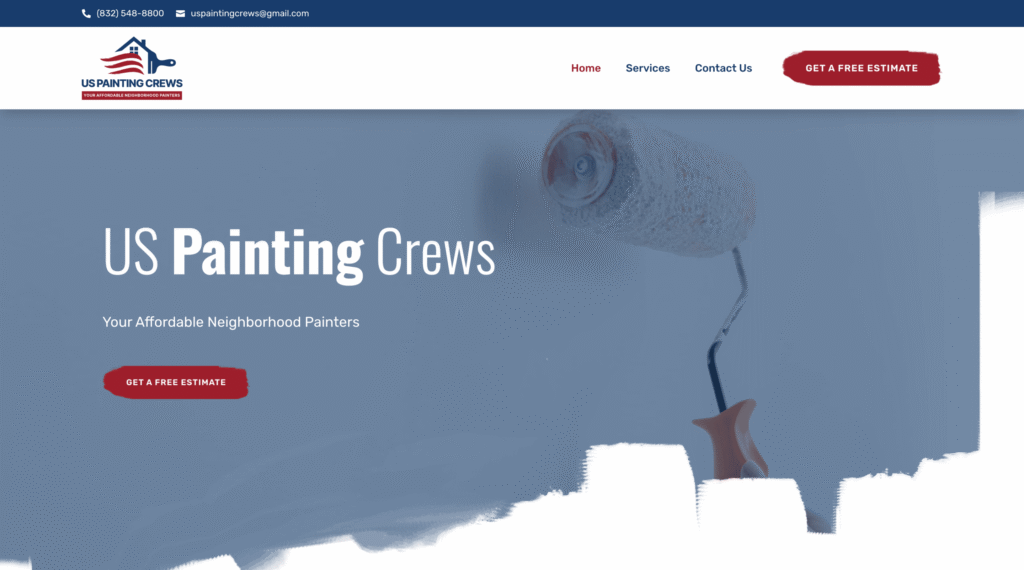
Signs it is time for a contractor website redesign
A redesign is not always about aesthetics. More often, it is about friction, trust, and missed opportunity. If your site has become hard for customers to use, the business will feel it long before anyone says the words “we need a redesign.”
Watch for these signs:
- The site looks rough or confusing on mobile devices.
- Contact information is hard to find or key actions are buried.
- Service details, announcements, or pricing-related information are outdated.
- Visitors can browse, but the path to requesting a quote feels clumsy.
- The business has changed, but the site still reflects an older version of the company.
That last point matters. A home remodeling website design built for a five-person company may not serve a more mature operation with a larger project mix. A flooring contractor website design that once felt modern may now undersell the quality of the work. A contractor website redesign should happen when the current site no longer matches either customer expectations or the real business behind it.
Think less about pages, more about customer decisions
Contractors often ask how many pages they need. That is not the best lens. A better lens is what decisions the customer needs to make.
A prospect usually wants answers to a few practical questions. Do you offer the specific service I need? Have you done this kind of job before? Do you work in my area? How do I contact you? Can I trust you enough to take the next step?
If the site answers those questions clearly, it can perform well without being massive. If it fails to answer them, adding more pages will not save it.
This is where a lot of DIY efforts stumble. Owners think in terms of content quantity. Visitors think in terms of confidence and ease. That gap explains why a simpler site can outperform a larger one if it is structured better.
The strongest choice is the one you can sustain
There is a temptation to ask which route is best in absolute terms. That is the wrong framing. The best route is the one your business can sustain, use, and keep current.
A website that launches beautifully but never gets updated is a weak asset. A simpler site that stays current, works well on mobile, and makes contacting you effortless can outperform it.
If you want maximum control and minimum upfront cost, DIY may fit. If you want expert help without a huge scope, a freelancer may be ideal. If you need a heavier strategic lift, an agency can justify itself. If you want a professional site without owning the technical details long-term, a managed website for small business may be the most efficient choice.
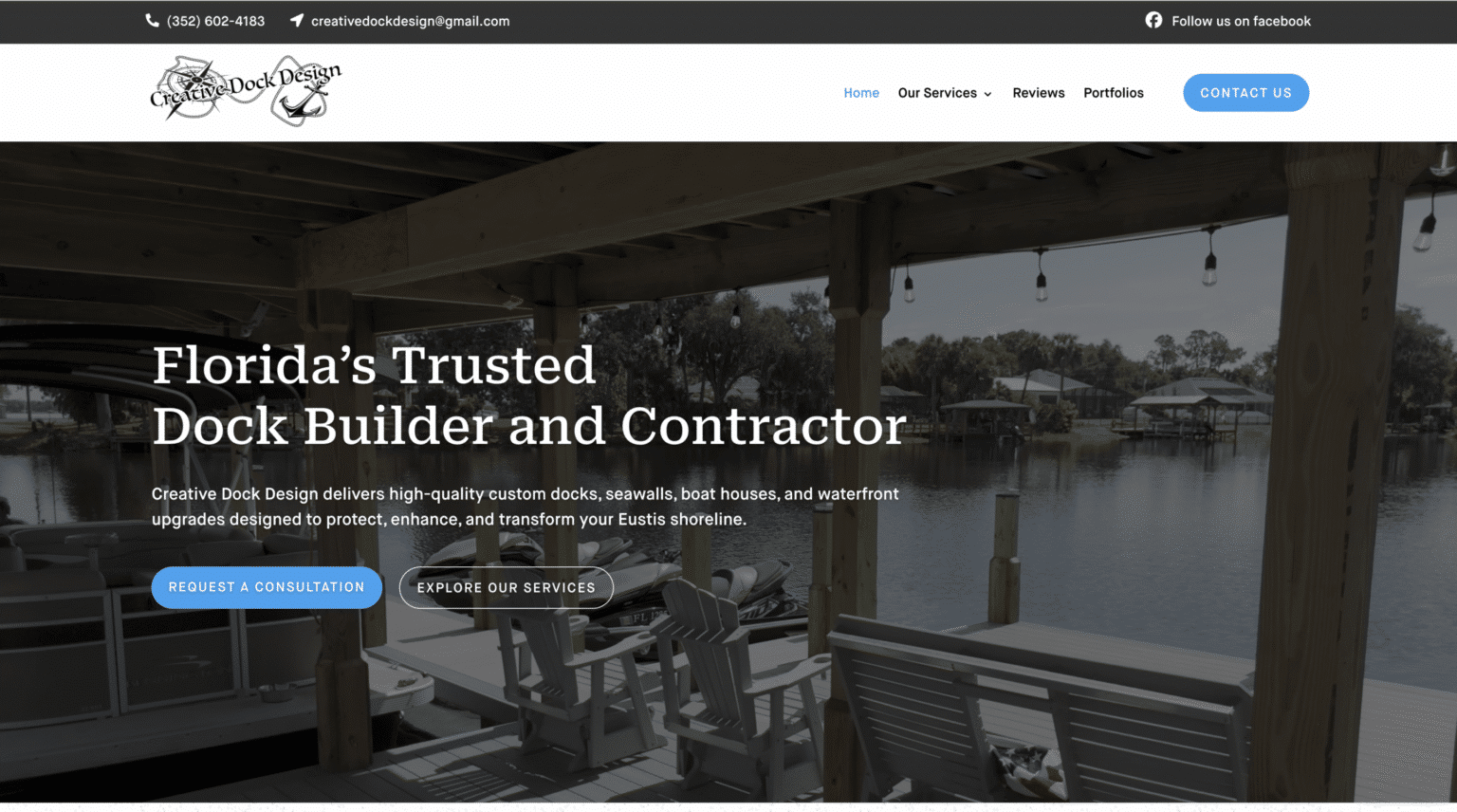
That decision should be made with clear eyes. Not every contractor needs a custom-heavy build. Not every contractor should try to piece together a site at midnight after a ten-hour day. The smartest investment is the one that matches your real operating style, not the one that sounds impressive in a sales pitch.
When a website supports customer tasks, stays current, and reflects the quality of the business behind it, it starts pulling its weight. That is the standard worth paying for, whatever path gets you there.